
“I See Many Parallels Between Music And Perfumery”
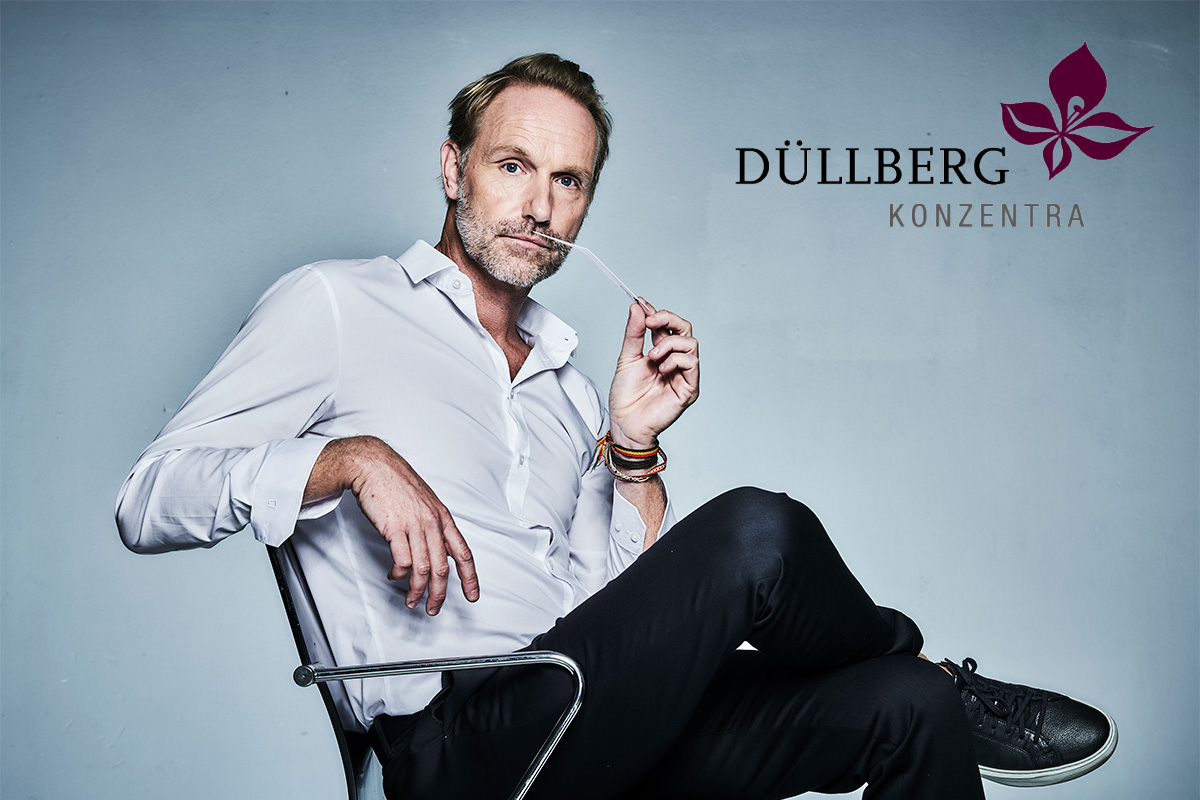
From Christian Plesch’s Diary (Perfumer at Düllberg Konzentra)
When I look back at how I became a perfumer, it was never really a straight-line plan. It was a combination of curiosity, good encounters and timing. In the mid-1990s, I initially studied art for two semesters. I wanted to work creatively and stand on my own feet. That led me to eventually become a laboratory technician.
Surrounded by raw materials, formulas and my first fragrance sketches, I became fascinated by fragrance and realised: This is it. I was fascinated by the idea that individual molecules could create feelings, memories and images in people. I was equally impressed by perfumers and their combination of knowledge, precision, intuition and creativity. The exchange with experienced perfumers was important to me. Egon Ölkers impressed me with his openness, clarity and respectful way of dealing with people.
In 1998, I began my training as a perfumer alongside two other trainees from different international backgrounds. I learned about raw materials, formulas and the craft. For me, perfumery has never been just craft or art. It is equally about exchange, knowledge and remaining open to others and their ideas.
The Language of Materials
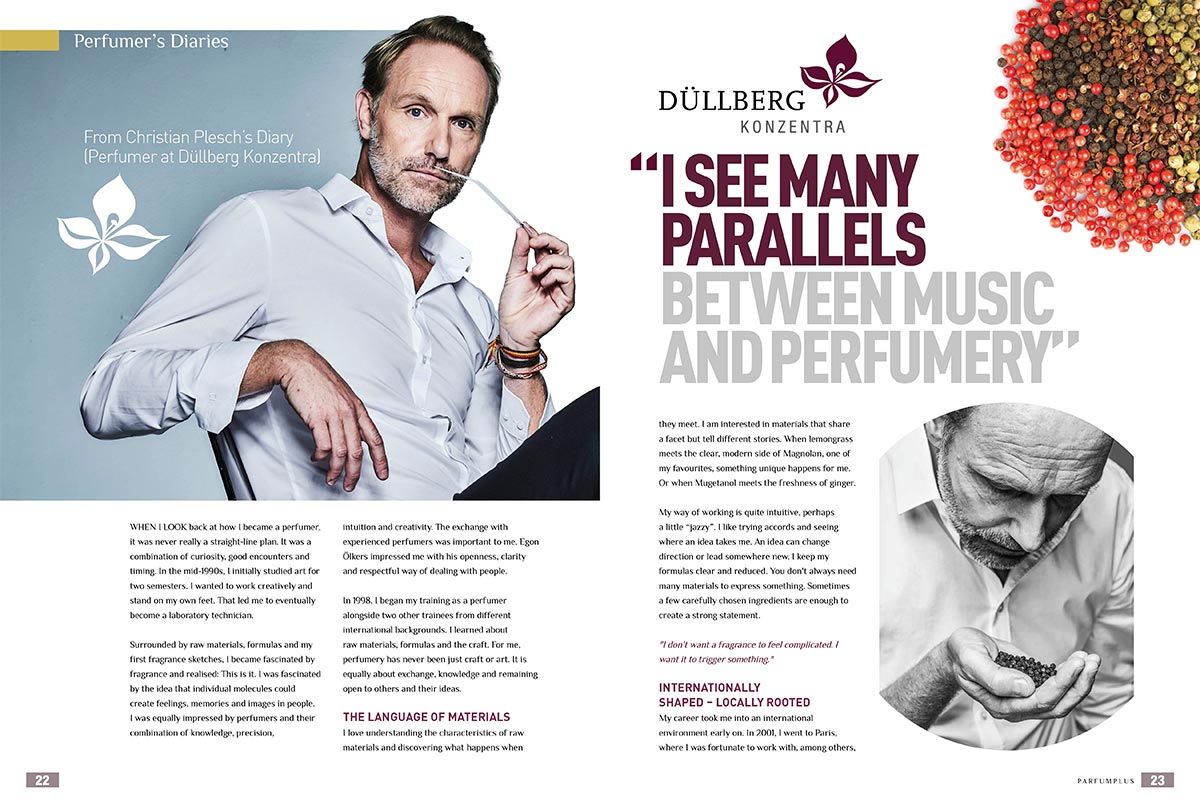
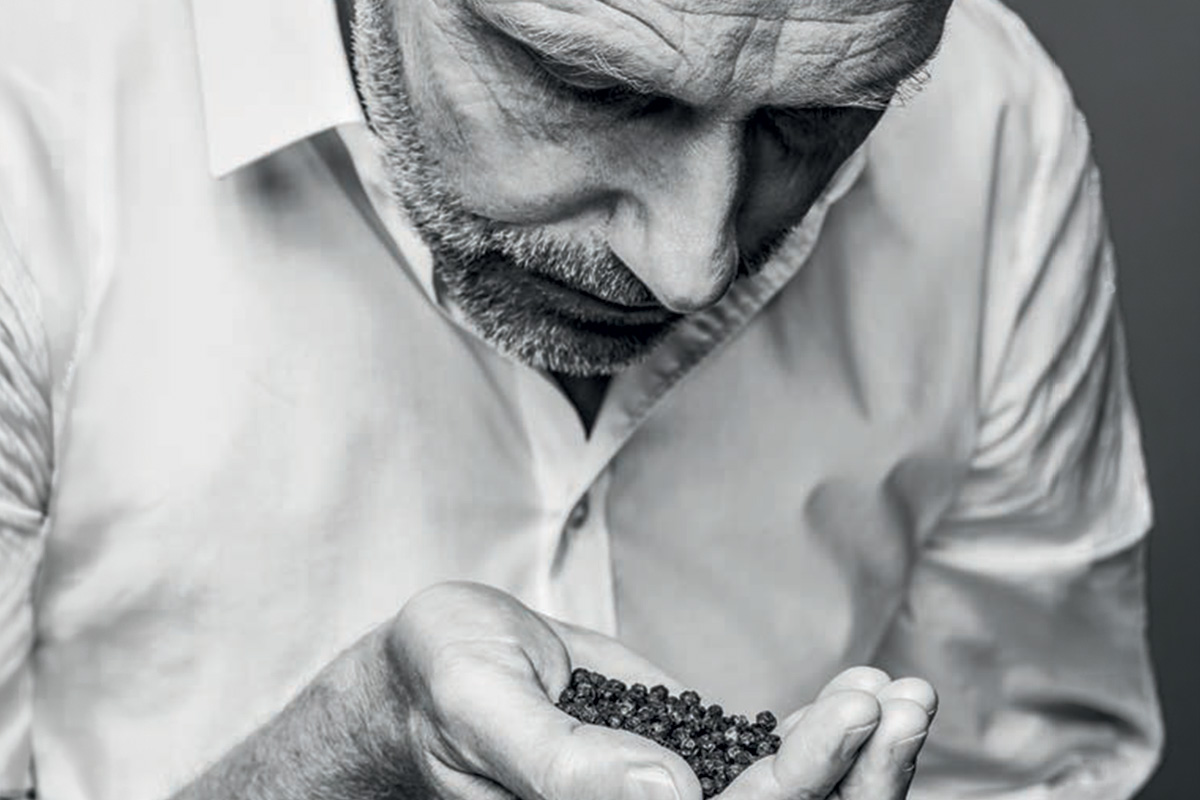
I love understanding the characteristics of raw materials and discovering what happens when they meet. I am interested in materials that share a facet but tell different stories. When lemongrass meets the clear, modern side of Magnolan, one of my favourites, something unique happens for me. Or when Mugetanol meets the freshness of ginger.
My way of working is quite intuitive, perhaps a little “jazzy”. I like trying accords and seeing where an idea takes me. An idea can change direction or lead somewhere new. I keep my formulas clear and reduced. You don’t always need many materials to express something. Sometimes a few carefully chosen ingredients are enough to create a strong statement.
I don’t want a fragrance to feel complicated. I want it to trigger something.
Internationally Shaped – Locally Rooted
My career took me into an international environment early on. In 2001, I went to Paris, where I was fortunate to work with, among others, Mark Buxton. From there, I moved to Hamburg, working on fine fragrances for the German market and cosmetic projects across Europe. Travelling to Dubai and Barcelona showed me how differently people perceive, wear and choose fragrances. I wanted to understand how people in Brazil live and experience fragrance, not simply the market through figures or briefs. That’s why I learned Portuguese. That experience changed my work and my understanding of fragrance.
For me, language was much more than just a means of communication. It gave me a different way of accessing the people and the culture.
Fragrances in Brazil are often more present and deeply rooted in everyday life than in Europe. The climate creates different demands in freshness, intensity and longevity. I learned to think about how a fragrance is actually experienced, rather than simply how it works on a blotter.
Since 2017, I have been contributing my skills to various international markets, such as the Middle East, Turkey, Africa and the DACH region, which eventually led me to Dullberg Konzentra at
the end of 2024 in Hamburg, where I could combine my international experience with my passion for raw materials.
Between Entrepreneurship and Passion
In my early forties, I decided to fulfil a dream and create my own brand, NASENGOLD.
NASENGOLD revolves around intoxication in its broadest sense – that feeling of being taken out of everyday life. Its success led to WACKELWASSER, focused on fresh, sparkling fragrances that remind me of mineral water. Both brands are personal to me, allowing me to experiment with ideas that might not fit a traditional brand brief. The industry gave me craft and experience; my brands give me additional freedom.
A Matter of Character
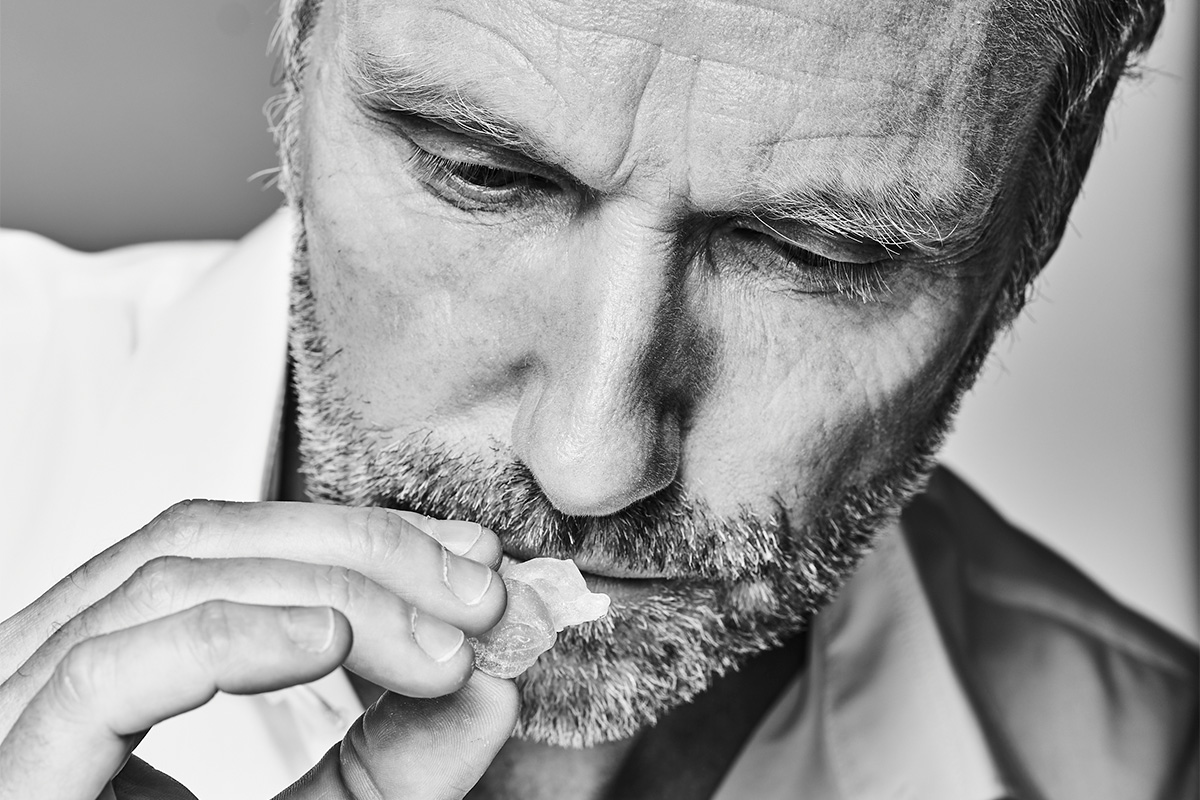
When I work on a composition, I want to be completely focused, but I also need exchange with others. Music also plays an important role. I see many parallels between music and perfumery. There are accords, structures, tension and release, and moments where something suddenly resolves. With fragrance, it is about how individual elements work together and what story emerges. Perhaps that’s where my intuitive approach comes from. I like working spontaneously and trusting my gut. That spontaneity leads me towards ideas I might never have reached through a completely planned approach.
Passing on Knowledge
Passing on knowledge has become increasingly important to me. I have learned an incredible amount from perfumers, colleagues, mentors and the people I have worked with. That’s why it feels natural to support young perfumers and evaluators. For me, it is about asking questions, sharing experiences and helping people develop their own nose and language. Because ultimately, every perfumer should find their own signature.
And What Remains?
Looking back, my career was never really a straight line. I came to the laboratory through art school, discovered fragrance, worked across markets, created my own brands and met countless people along the way. Much of it wasn’t planned. And maybe that’s exactly what I like about it. For me, perfumery today is a combination of experience, curiosity and flexibility; of knowledge and intuition; of precision and, sometimes, simply trusting your gut.
I believe you are never finished as a perfumer. There is always another raw material to discover, another combination to try, or another person who can spark a new idea. In the end, it’s not just about creating a good fragrance. And perhaps that is the real language of perfumery.