
Read this post in
 Arabic
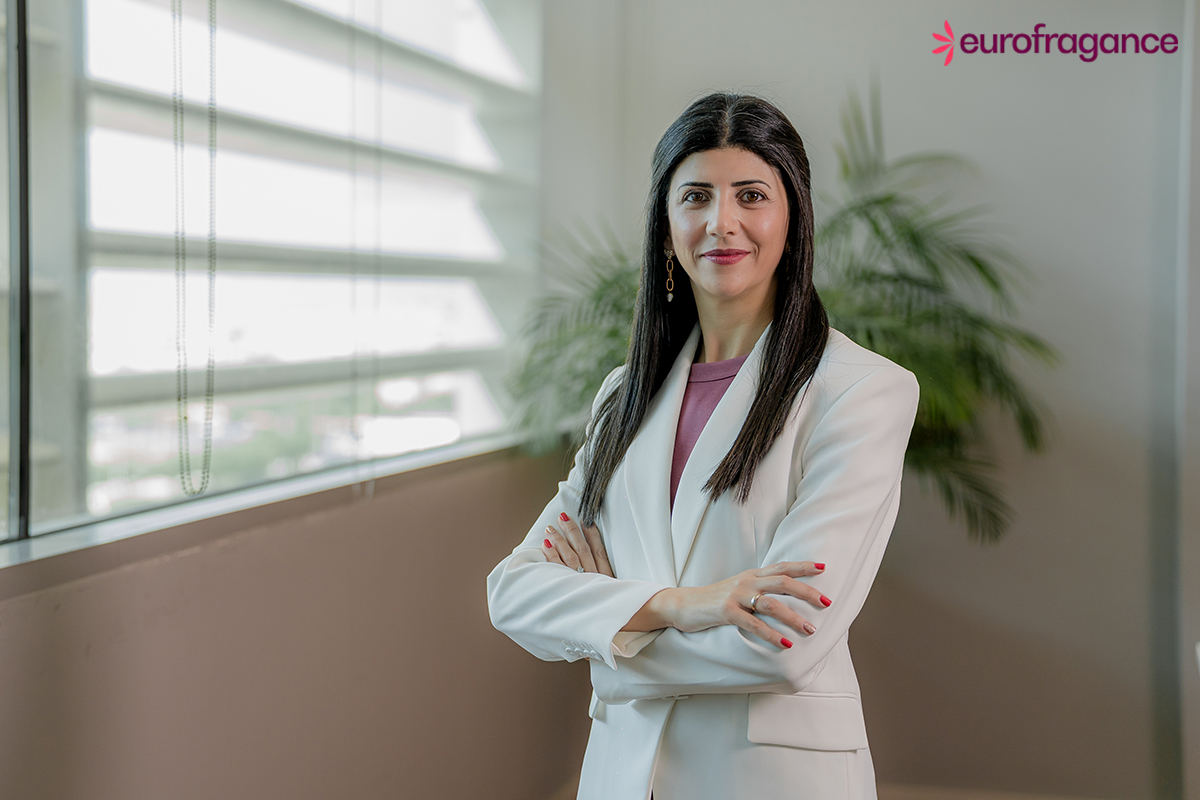
With more than two decades in fragrance creation, Oumayma Tabet now leads Eurofragance’s Middle East operations. She speaks to ParfumPlus about creativity, cultural influence, sustainability and how the region’s rich scent heritage continues shaping global perfumery trends.
ParfumPlus: With over 21 years in the fragrance industry, what key transformations have shaped your professional journey?
Oumayma Tabet: With more than two decades in the fragrance industry, my journey has been shaped by both continuity and evolution. One constant throughout has been the industry’s unwavering focus on performance. Long-lasting diffusion and technical robustness have always been fundamental pillars of perfumery and they remain just as essential today.
What has evolved over time is the depth of what we build around that performance. Today, creation is not only about how a fragrance behaves, but also about the emotion it evokes, the story it tells and the values it represents, especially in a region like the Middle East, where scent is deeply tied to identity and memory.
My early years as a fragrance developer gave me a strong technical and creative grounding. It taught me to innovate, to understand raw materials intimately, and to push for excellence under any constraint. That foundation never left me.
Recently, though, moving closer to the consumer and our people has truly transformed my perspective. In the Middle East, fragrance isn’t just a product. It’s an expression of identity, part of traditional rituals, and forms a large part of people’s memories. That deep cultural connection pushed me to think beyond formulation and think about creating fragrances that are rooted in storytelling, giving consumers an experience every time they smell the scent.
I think the biggest shift for me has been the industry and, particularly, Eurofragance, taking ownership and responsibility. Creativity must go hand in hand with sustainability, authenticity, and cultural respect – these are no longer optional; they define modern leadership.
I would definitely say that balancing creative freedom with conscious responsibility has been the most defining evolution within my career so far.
PP: You joined Eurofragance in 2023 to lead its Creative Centre before becoming General Manager – Middle East in 2026. How has your creative background influenced your leadership approach?
OT: I believe having a creative background teaches you to listen to everything around you – clients, colleagues, markets and also the things that aren’t said, such as emotional cues, and this really shapes how I lead.
When I joined Eurofragance in 2023 to lead the Middle East Creative Center, my focus was on building a collaborative, client-centric environment. Perfumery isn’t created by just one person; it is a collective of creativity at work.
Now in my role as General Manager, I apply the same philosophy. I believe in empowering our teams by creating space for ideas to flourish and encouraging our creatives to experiment with both ingredients and techniques.
Leadership in such a creative industry is trying to balance figures and feelings, intuition and data, technology and experimentation. We don’t get it right all the time, but we do have fun learning along the way.
 PP: Eurofragance blends the agility of an independent house with the strength of a global company. How does this positioning support your regional strategy?
OT: Our positioning is one of our greatest assets. As an independent house, we move with agility, and we can adapt quickly to regional trends, bespoke projects, and maintain close relationships with clients.
At the same time, our global infrastructure provides us with access to technical excellence, advanced production capabilities and sustainably sourced proprietary ingredients.
For the Middle East, this duality is essential; this region moves fast and values exclusivity. Our agility allows us to create personalised and culturally resonant fragrances, while our global strength ensures consistency, quality and scalability. We have some of the top industry talents and really strong partnerships we’ve built with our customers, giving us a great platform for creativity and collaboration.
PP: Sustainability is now central to fragrance creation. How is Eurofragance integrating responsible sourcing and long-term environmental commitments?
OT: Sustainability is not a trend at Eurofragance, it is our moral compass and a strategic priority. Our approach is structured around four pillars, which guide us through everything from sourcing to innovation.
Today, we work with our main suppliers to ensure they have sustainability policies in place, which we have achieved with almost 80% of suppliers to date, reinforcing a responsible and transparent value chain. Our Spanish site operates on 100% renewable electricity, and in the UAE, we’ve reduced supply chain emissions, saving more than 5.5 tons of CO₂.
Our company has been awarded a Platinum EcoVadis rating for the second consecutive year through actively reducing and recycling waste as part of a circular approach.
Our newest proprietary ingredient, Olivante®, also perfectly illustrates our commitment to pushing boundaries in pursuit of excellence. Crafted from upcycled olive pulp, it embodies the harmony between innovation and sustainability, while giving our perfumers a distinctive, high-quality material that enhances fragrance creations.
Looking ahead, we are expanding renewable energy across our global operations and embedding circular economy principles into product development, ensuring that the ingredients we value today remain responsibly sourced for generations to come.
PP: The Middle East continues to influence global perfumery, particularly through oud and layering rituals. How do you see this impact evolving internationally?
OT: The Middle East is a region where fragrance is not just a product but a language, and we are really fortunate to be part of this cultural richness. The Middle East is no longer a niche presence; it is shaping global olfactive direction. Oud, once considered intense or exotic in Western markets, has become a mainstream luxury note. Layering rituals, combining oils, sprays, and bakhoor, are also inspiring global consumers to personalise their fragrance experiences.
Looking ahead, I believe we will see deeper interpretations of Middle Eastern ingredients. We’re deepening partnerships, investing in innovation and creativity, while staying closely aligned with the region’s fast-evolving fragrance culture.
In Dubai, we are expanding our local capabilities and refurbishing our current creative space to be more client-centric and experiential. Through our Dubai Creative Center and our upcoming innovation footprint in Saudi Arabia, we’re co-creating with local brands to craft scents that fuse regional heritage with modern sophistication that will transcend across the globe, for everyone to enjoy.
 PP: How is Eurofragance leveraging its Middle East Creative Centre as a strategic innovation hub?
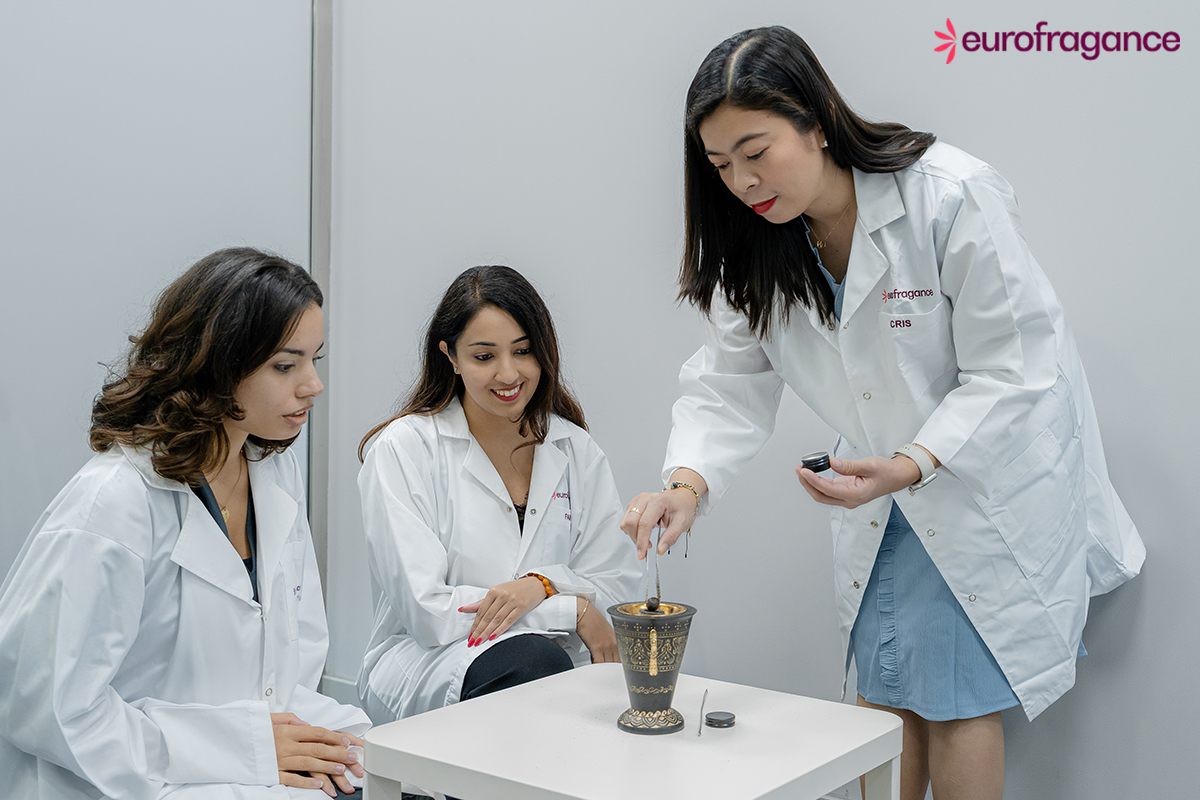
OT: Our Dubai Creative Centre is an immersive co-creation environment; it brings perfumers, evaluators, and clients into one immersive environment where ideas can evolve quickly. I truly believe that partnerships reinforced my belief in the power of people and the strength that comes from shared ideas, with client centricity and collaboration being central to fuelling our position as a trusted industry partner.
In the Middle East, we are building on that momentum by staying close to our partners: listening, adapting, and innovating with purpose, anticipating trends in real time and responding with agility, making sure that cultural insights are transformed into forward-thinking fragrance concepts.
In a market as dynamic and competitive as the Middle East, the Centre also acts as a bridge between local brands and our global R&D teams, ensuring that every innovation is deeply rooted in regional understanding while meeting international standards.
Our ambition is to be more than a fragrance house. We aim to remain a trusted long-term partner, investing in local talent, expanding into key markets such as Saudi Arabia, and creating sustainable, high-performing fragrances.
PP: How do you balance heritage ingredients like oud, amber, rose, and musk with modern techniques and storytelling?
OT: Heritage ingredients carry centuries of cultural meaning in this region; Our role is not to reinvent them but to reinterpret them with care to continue their olfactory evolution.
We combine high-quality traditional raw materials with modern extraction techniques and molecular precision. For example, combining oud with fruity scents creates a bridge between tradition and modernity.
The key lies in balance, honouring the origin and cultural richness of these ingredients while allowing them to evolve in meaningful, contemporary ways.
Some of our proprietary fragrance ingredients from the Middle East, where scent is deeply personal and often tied to tradition, enable us to offer something truly special: a signature that is both modern and rooted in authenticity. This allows us to create fragrances that are exclusive, rich and aligned with extraordinary qualities that consumers seek in any new creation. These raw materials such as Euphorion® and L’Âme du Bois®reflect our commitment to creativity, sustainability and quality.
PP: With rising demand for niche, personalised, and high-concentration fragrances, how are consumer expectations in the Middle East evolving?
OT: Fragrance consumers in the region are becoming more sophisticated and selective. They’re some of the most knowledgeable in the world, always looking for scents that are intense, long-lasting and truly distinctive.
High-concentration formats like extrait de parfum are becoming more popular, and many people are choosing signature scents that reflect their personality.
There’s also a growing interest in the story behind a fragrance, where the ingredients come from, what inspired it, and how sustainable it is. While exclusivity still matters, today’s consumers also want transparency and honesty from the brands they support.
PP: Looking ahead, what emerging scent trends or consumer behaviours will shape the future of perfumery?
OT: Fragrance is becoming more personal and expressive than ever. People are drawn to blends that mix traditional notes with modern twists, and there’s growing interest in sustainable and innovative ingredients. Layering rituals and different textures are also influencing how scents are worn, while fragrances that support mood and wellbeing are gaining popularity.
At the same time, many consumers are looking for something exclusive and beautifully crafted, exceptional, high-quality creations that feel truly made for them.

Read this post in
Arabic


Add Comment